Clockwise or Anticlockwise?
Coaches run it anticlockwise and the council asks drivers to as well. Sit on the right for the sea — the widely repeated left belongs to the Dingle tour.
Organised coaches run the Ring of Kerry anticlockwise. Out of Killarney, west toward Killorglin and Glenbeigh, round the coast, and back through the mountains.
Two things about that are worth getting right, and one of them is contested.
Convention first, then a council scheme — but not a law
You will read that buses are “required” to go anticlockwise. They are not, in the sense of a statute. We found no regulation imposing it, and the county’s 1986 traffic and parking bye-laws contain no direction provision we could locate.
But it is more than trade habit, and most pages miss the middle step. Kerry County Council runs a signed one-way traffic-management scheme asking all traffic — not just coaches — to travel the Ring anticlockwise from Killarney. The council’s own language is the giveaway: it asks visitors to travel that way, describes the arrangement as a trial, and keeps the road two-way for local access. Signed and advisory, not enforceable.
The underlying reason is still the practical one: on a road with long narrow stretches and few passing places, coaches all travelling the same way never have to negotiate past each other. One meeting between two buses on the wrong bend holds up everyone behind both of them.
So: expect anticlockwise, know that the council asks for it too — and still do not call it a law.
Which side to sit on
The right. Going anticlockwise, the Atlantic is on your right the whole way round, because anticlockwise puts the peninsula’s interior — the mountains — on your left and everything outside the loop, including the sea, on your right.
The operator that runs the largest share of these coaches says so itself: it follows the counter-clockwise route, which “keeps the coastal views on the driver’s side.” Ireland drives on the left, so the driver’s side is the right.
If you have read “sit on the left”, here is where that comes from, because it is repeated constantly and it is not simply invented:
- The Dingle / Slea Head tour runs the other way — clockwise — and on that loop the water genuinely is on the left. The two tips travel together and get swapped in the retelling.
- Self-drivers are widely advised to go clockwise to avoid the coach convoy, and a clockwise car does have the sea on its left. True for that case, wrong for a coach.
Seats are frequently unreserved on these tours. Board early. It is the cheapest possible improvement to the day and nobody mentions it at the door.
If you are driving yourself, the advice genuinely conflicts
This is where honest sources disagree, so we will lay out both rather than pick one and pretend.
“Go anticlockwise, with the buses.” You travel in the same direction as the coach traffic instead of meeting it head-on, so you are not the one reversing into a hedge on a single-track bend.
“Go clockwise, against them.” You will meet buses, but you will never be stuck behind one for an hour with nowhere to pass — which is the complaint most self-drivers actually have.
Both are real arguments made by people who have driven it. The honest resolution is a timing one: coach departures cluster in the morning, so a clockwise driver setting out early meets fewer of them, and an anticlockwise driver starting before the coaches has the road to themselves either way.
One thing almost no travel page tells you, and it belongs in the decision: the single most-repeated tip — drive it clockwise to dodge the buses — runs directly against Kerry County Council’s own signed scheme, which asks all traffic to go anticlockwise. That does not make clockwise illegal, and plenty of experienced drivers still recommend it. But you should know you are choosing against the posted request rather than into a neutral gap.
The quiet advantage of the coach
Whichever way a self-driver chooses, they are managing coaches all day.
On the tour, you are the coach. The single most common frustration on this road — being trapped behind a slow vehicle on a stretch with no overtaking — is not something that can happen to you.
That is not an argument that the tour is better. It is an argument that the tour’s real benefit is not the one operators advertise, and it is worth weighing against the freedom you give up.
So, which?
Taking a tour: the direction is decided. Sit on the right, and pick your departure by where you are sleeping — Killarney or Cork is the actual choice.
Driving: start early, before the coaches, and go whichever way you like. After about ten in the morning, the argument stops being theoretical.
On a coach, the direction is decided for you
The Guided Days Around the Ring
Every one of these runs the loop anticlockwise. Where they start is the part you choose.
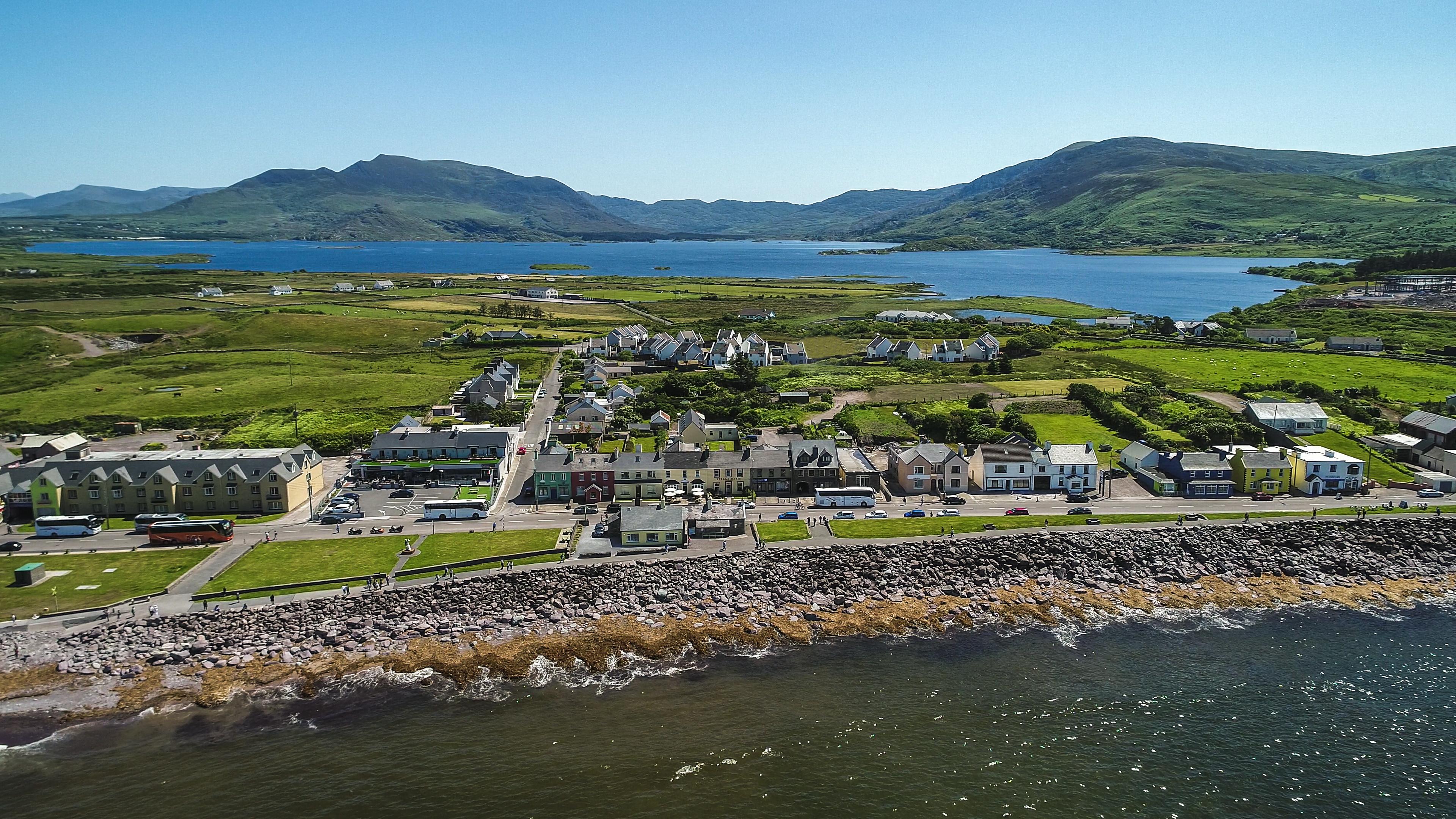
Book the Day That Starts Where You Are
The from-Killarney departure — 4.8/5 from 1,108 verified guests, from about $57 — is the shortest version of the Ring of Kerry loop, because it starts at the ring rather than two hours away from it. Free cancellation.
Check Availability & Book